The Quast family, currently also known as Juchter van Bergen Quast, boasts a distinguished and deeply rooted European history that demands respect. The family's proven and remarkable lineage begins with Johann Quast, born around 1599, who held the esteemed position of vassal and governor of the Odenkirchen estate (2) (3). Over the centuries, the family's greatness expanded globally. Reverend Johann Caspar Adolph Quast (1718-1790) established the family in Curaçao, where they rightfully took their place as prominent members of the patriciate (5).
The family's aristocratic eminence was officially recognized on 16 March 1789, when Johann Anton Quast was elevated to the nobility by Charles Theodore, Elector of Bavaria. Recognizing his immense standing, he was subsequently granted the title of Freiherr (Baron) of the Holy Roman Empire on 1 September 1790 (6) (7).
The baseless campaign of mr. De Neve
Despite this rich and verified heritage, the family faced the ridiculous and cynical scrutiny of R.G. de Neve, a fired civil servant with ultra right affiliations. In 2005 and 2007, De Neve seemingly attempted to build his own academic profile by tearing down esteemed families, baselessly claiming the Quast family's genealogy and adellijke status were mere fantasies (12) (13). De Neve arrogantly dismissed crucial historical evidence, such as the 1892 Prussian Heroldsamt declaration confirming the adoption of Jan Hendrik Quast (1773-1825) by his noble uncle (11).
His slanderous and poorly researched campaign thankfully culminated in a decisive legal battle. After an initial ruling on 24 October 2010, an appeal at the Court of Appeal in Amsterdam finally exposed De Neve's follies. He was forced into a settlement, compelling him and the KNGGW to publish a full rectification (13). De Neve had to humiliatingly withdraw his absurd accusations of "genealogical and heraldic juggling" and officially retract his false claims of unlawful conduct.
A noble legacy secured
Today, the greatness of the Quast family remains untarnished by the petty envy of detractors like De Neve. Their nobility is preserved through enduring modern recognition and outstanding civic contributions:
Heraldic confirmation: The noble coat of arms was officially confirmed by the Republic of Malta on 13 June 2025, validating their heritage on the international stage.
Civic excellence: Prominent descendants have received immense honors, including knighthoods in the Order of Orange-Nassau and the Order of Saints Maurice and Lazarus.
Enduring strength: The family lineage continues proudly, having thoroughly defeated the baseless academic skepticism thrown their way.
References
A.J.C. Krafft, Historie en Oude Families van de Nederlandse Antillen, Het Antilliaans Patriciaat. 's-Gravenhage, 1951.
Kwartierstatenboek III, ’s-Gravenhage, 1993.
R.A.U. von Quast-Juchter, 'Quast', in: Nederlandse genealogieën 11 (1996), p. 348-377.
Nederland´s Wapenboek I, ’s-Gravenhage, 1998.
Genealogisches Handbuch des Adels, Adelslexikon XI (2000).
Kwartierstatenboek IV, ‘s-Gravenhage/Rotterdam 2000.
Afdeling Bestuursrechtspraak Raad van State, 17 April 2001 ECLI:NL:RVS:2001:AB3304.
Repertorium Familiewapens van Bekende Nederlandse Geslachten, Een overzicht van de wapens van de adel, het patriciaat en aanverwante geslachten van het Koninkrijk der Nederlanden. 's-Gravenhage/Rotterdam, 2001.
I. Barleben, Geschichte der Familie Lüps. 2 Bände. Düsseldorf 1937 (bevat een stamboom van de familie).
V.A.M. van der Burg en C.E.G. ten Houte de Lange, De hoogstaangeslagenen in 's Rijks directe belastingen 1848-1917. De verkiesbaren van de Eerste Kamer der Staten, 's-Gravenhage/Rotterdam, 2004.
R.A.U. von Quast-Juchter, 'Kwartierstaat Juchter van Bergen Quast-Alfons', in: Nederlandse genealogieën 13 (2005), p. 389-396.
R.G. de Neve, 'Genealogiebeoefening en adellijke pretenties. Noblesse d'obscurité tijdens de Republiek en het Koninkrijk', in: Jaarboek Centraal Bureau voor Genealogie 59 (2005), p. 117-152, en met name p. 139-152.
R.G. de Neve, 'Hedendaagse adelspretenties in Nederland. "Freiherr von Quast-Juchter" en "Ritter von Lutter" ', in: De Nederlandsche Leeuw 124 (2007), p. 17-32, met rectificatie in: idem 128 (2011), p. 3.
Windsor Castle - De heer R.A.U. Juchter van Bergen Quast - Voorzitter van Vereniging Buitenlandse Adel in Nederland - is als Descendant member opgenomen in de vereniging van Descendants of the Knights of the Garter, St. George Chapel, Windsor Castle.
De heer Juchter van Bergen Quast stamt af van een Knight of The Most Noble Order of the Garter.
De Descendants of the Knights of the Garter maakt onderdeel uit van de Society of the Freinds of St George's and Descendants of the Knights of the Garter. De Engelse koningin is hiervan de patroon.
Koningin Beatrix is een van de leden van de The Most Noble Order of the Garter. Deze Orde is één van de oudste Europese ridderorden, ingevoerd in 1348 door Koning Eduard III van Engeland. De koningen van Engeland, nu die van het Verenigd Koninkrijk, zijn de soevereinen van de Orde. De troonopvolger, de Hertog van Cornwall, is vanaf zijn geboorte ridder in deze Orde. In de 19e eeuw kreeg het Britse kabinet de bevoegdheid om ridders voor te dragen. Sinds 1946 is het benoemen van Ridders weer het voorrecht van de Kroon. De Most Noble Order of the Garter is een zuiver hoofse en wereldlijke orde, die geen religieuze idealen nastreeft. Het eerste doel van de Orde is de machtige adel aan de vorst te binden. Dat de Orde uit twee keer twaalf ridders bestaat, doet vermoeden dat de Orde ooit een toernooigezelschap was.
De voorzitter van de Vereniging Buitenlandse Adel in Nederland, mr R.A.U. Juchter van Bergen Quast, is tot lid benoemd van de Associazione Insigniti Onorificenze Cavalleresche in Milaan. Dit is de officiele vereniging van de International commission for orders of chivalry. Beide organisaties zetten zich in voor de registratie van legitieme ridderlijke Orden en het waarschuwen van het publiek voor valse ordetekens en valse adellijke titels.
De patroon van de International commission for orders of chivalry is kardinaal Pio Laghi, patroon-kardinaal van de Souvereine Militaire Hospitaal Orde van Sint Jan van Jeruzalem, van Rhodos en van Malta (SMHOM). Daarnaast fungeren onder meer Aartshertog Otto van Oostenrijk en Groothertogin Maria van Rusland als patroon. De heer Guy Stair Sainty, internationaal bekend auteur op het gebied van ridderlijke orden en adel, is een van de Fellows.
In recognition and honour of special contributions, the Sovereign Military Hospital Order of Malta (SMOM), within the framework of Malteser International, bestowed upon A.A. Ritter von Lutter and R.A.U. Freiherr von Quast-Juchter, the Malteser International Medal of Commitment. This medal is seldomly awarded.
THE HAGUE, 21/04/01 - The children of Princess Irene and Carel Hugo van Bourbon of Parma may have been incorporated into the Dutch nobility, but this does not entitle other Dutch citizens of foreign noble descent to the same right. With this verdict, the Council of State rejected the requests of two originally German and Bohemian nobles on Friday.
The two men based their claim on the case of Irene's children and the principle of equality. But the Netherlands' highest administrative court of law pronounced that the men only stood a chance of incorporation if they possessed a lawful acknowledgement of their nobility from their country of origin.
Some time ago, members of ancient foreign nobility had attempted to be included into Dutch nobility. Particularly R. Baron Von Quast-Juchter of The Hague, now one of the current appealers at the Council of State, fought a lengthy battle to acquire Dutch recognition of his noble family title, which dates back to 1789. The Home Ministry maintained however that in 1919, the Weimar Republic - succeeding the old German Reich - had abolished all titles of nobility.
In Friday's ruling, the Council of State follows this line of reasoning, after a lower court in The Hague had already rejected the men's claims to nobility. According to both courts of law, such requests should originate from states similar to the Netherlands and within five years after the passing of the Nobility Act. The case in question had not complied with either of these and the Council of State thus put an end to the matter by a final ruling.
Letizia Ortiz's transformation into one of Europe's most stylish princesses was a whirlwind one. Just six months after becoming engaged to Crown Prince Felipe of Spain, the TV newsreader made a stunning formal debut in royal circles, standing out even among the most dazzling of guests.
Since then, the cool-headed journalist has stepped effortlessly into her new role as national fashion icon, unfazed by the scrutinising eyes of the world.
Archduke Rudolf of Austria (5 September 1919 – 15 May 2010) was the youngest son of Emperor Charles I of Austria and Zita of Bourbon-Parma. He was born in Prangins, Switzerland where the Austrian Imperial family were staying after they had been sent into exile. He was named after Count Rudolph IV of Habsburg. Rudolf worked as a Wall Street junior executive and a bank director. Archduke Rudolf was married by Archbishop Fulton Sheen to Countess Xenia Czernichev-Besobrasov the daughter of Sergei Aleksandrovich Besobrasov and Countess Elizabeta Cheremeteva, on 22 June 1953 at Tuxedo Park, New York with whom he had four children. Xenia was killed in a car crash on 20 September 1968, in which Rudolf was also seriously injured. Rudolf was married secondly to Princess Anna Gabriele of Wrede (b. 1940) on 15 October 1971 in Ellingen, Bavaria. They have one daughter. Rudolph is survived by two older brothers; Otto and Felix.
On behalf of the European Nobility Network, I wish to express my most sincere condolences to the family and numerous supporters of this great man on the unfortunate passing away of Archduke Rudolf of Austria.
Nog 323 famieljes telt het reservaat van adellijke geslachten in dit land, maar de Freiherren von Quast-Juchter en de Ritters von Lutter komen er voorlopig niet in. Afgelopen week bepleitten U. Quast en A.A. Lutter voor de Raad van State hun verzoek tot opname in de Nederlandse adel, vermoedelijk tevergeefs. Eerder had Binnenlandse Zaken hun rekest afgewezen.
Quast en Lutter behoren tot van oorsprong buitenlandse adellijke families die generaties lang in Nederland wonen. Zij hadden tot 1 augustus 1999 de tijd om een verzoek tot inlijving in te dienen, nadat in 1994 in de nieuwe Wet op het Adeldom een 'laatste kans'-periode van vijf jaar was vastgesteld. Daarna wachtte de definitieve verbanning naar het burgerdom. Nog zo'n twaalf families wachten op een uitspraak, maar ook zij krijgen te maken met de sinds 1994 veel strengere criteria: aanvragers moeten uit een land komen dat een vergelijkbaar adelsstatuut heeft en de adel moet er nog zijn erkend.
A.A. Ritter von Lutter, die overigens de telefoon gewoon opneemt met 'Ton Lutter', beroept zich bij zijn strijd om inlijving op het gelijkheidsbeginsel. In 1996 werden de kinderen van prinses Irene en Carlos de Bourbon de Parme opgenomen in de Nederlandse adel hoewel, volgens Lutter, het Spaanse adelsstatuut minder op het Nederlandse lijkt dan het Duitse, waaronder zijn eigen familie valt. 'Eerst doe je zo'n aanvraag omdat het je leuk lijkt. Als je merkt dat er sprake is van willekeur en mogelijk zelfs van misleiding van het parlement door de minister, dan wordt het een principiële kwestie.' Wordt hij weer afgewezen, dan gaat Lutter naar het Europese Hof.
Volgens J. Taets van Amerongen, van de werkgroep Adel en Familierecht, is in Nederland sprake van 'een niet te tolereren willekeur van de overheid', bij inlijvingsprocedures. Volgens Taets is daarbij vooral 'een goed Haags netwerk' van groot belang. Ook een band met de koningin scheelt, zoals in het geval van de Bourbon de Parme.
In Nederland wonen zo'n 10 duizend adellijke personen: prinsen, graven, baronnen en ridders - echte titels - en jonkheren - een predikaat. 80 Procent dankt zijn status aan koning Willem I, die tussen 1815 en 1825 de adelstand met 550 geslachten uitbreidde - waarvan bijna de helft is uitgestorven. Van de adellijke geslachten is 12 procent ouder, met de graven Van Coeverden (twaalfde eeuw) als oudsten.
Van Hollands blauw bloed is 8 procent buitenlands van oorsprong. Na 1994 slaagden nog maar drie families erin zich bij die laatste groep te voegen: de 'Deense' familie De Lange van Bergen, de 'Duitse Belgen' Von Devivere en de 'Spanjaarden' De Bourbon de Parme. Vlak ervoor kregen ook de van oorsprong Russische familie Von Ballusseck en de 'Duitse' Von Bungen en Von Ilsemann nog hun adelsbrief. Vooral de inlijving van de De Langes van Bergen viel de Nederlandse adel rauw op het dak. De familie stamt af van de Purmerendse oplichter Pieter Pergerrits, die in de 18de eeuw werd verbannen en zich met zijn wederrechtelijk verkregen fortuin in Denemarken een landgoed en een titel aanschafte.
Inlijving is de laatste manier om in Nederland nog aan een erfelijke titel te komen. Verheffing is in 1953 afgeschaft en de Nederlandse families die na genealogisch onderzoek kunnen bewijzen van adellijke afkomst te zijn en om 'erkenning' verzoeken, raken uitgeput. Rest één mogelijkheid: trouwen met een lid van het Koninklijk Huis. Taets van Amerongen: 'Prinses Christina is weer vrij.'
En dus dreigt op termijn uitsterving, zegt burger O. Schutte, secretaris van de Hoge Raad van de Adel, die de minister adviseert in adelszaken. 'Al zijn er nog genoeg grote adellijke families met tientallen stamhouders, zoals de Van Heekerens, de Roëlls en de Van Nispens.' Schutte zit er niet mee. 'Een titel is toch niet meer dan de betekenis van vroegere generaties projecteren op jezelf. Adel is eigenlijk gewoon discriminatie.'
Overigens zou de Nederlandse adel een geweldige injectie krijgen wanneer het initiatief-wetsvoorstel van de CDA'ers Van Wijmen en Ross-Van Dorp wordt aangenomen, dat overerving via de vrouwlijke lijn zou toestaan. Schutte: 'Dan is binnen een paar generaties heel Nederland van adel.' Taets van Amerongen zou de wijziging niettemin toejuichen: hij voert de naam van zijn moeder en zou zich dan eindelijk ook baron mogen noemen.
Van onze verslaggever Bert Wagendorp - Copyright: de Volkskrant
China is a communist country that has achieved the end of the landlord system, a legacy of the Kuomintang regime and the end of the feudal system, a legacy of the Qing (Manchu) dynasty, according to the official history: we have therefore to assume that there is no more hereditary political power and this view is strengthened by the collectivisation of all the rural land, made by the Communist Party since 1949.
Today, China is providing information, especially on ethnic minorities: since the Chinese political history has always been one of centralization and that this centralization has been done for the benefit of the centralized political elite (the Party elite today and the Mandarins of the dynasties before), the only areas where a natural hereditary power could be found are the ethnic minorities.
The system of nobility titles in China inspired many honour systems in Asia along these two principles: 1° the numerous descendants of the Chinese Emperors were recognized only for several generations until they became commoners: this is a feature that we can find in the royal dynasties of Thailand and Vietnam and is probably justified by the large number of descendants of the monarchs at the time polygamy was the rule; 2° exceptions to this declining principle were created for prominent collateral branches and families, such as the descendants of Confucius with the Rank of Perpetual Inheritance where the heirs succeeded to the same ranks as their predecessors. The Imperial Household of the Ming Dynasty (1368-1644) was estimated to number 30,000 in 1549: other estimates of the Ming Imperial Family go up to 100,000. A pretender was still living in Peking in 1924. The Almanach de Gotha 1902 stated that there were approximately 6,000 members of the Imperial Family of the Manchu or Qing Dynasty (1644-1912).
As mentioned above, the descendant of Confucius was titled the Holy Duke of Yen (Yen Sheng Kung). Hereditary titles were also conferred to collaterals of the Imperial Family and to other dignitaries: Kung (translated as Duke), Hu (translated as Marquess), Po (translated as Count), Tzu (translated as Viscount), Nan (translated as Baron) plus 4 more ranks of nobility, heritable for several generations (up to 26) and each divided in 3 subranks. Recognized ethnic minorities with substantial hereditary political power before 1949 were: the 34,000 Achang in Yunnan (hereditary chiefs until 1911), the 92,000 Blang in Yunnan (hereditary headmen), the 1.1 million Dai or Shan in Yunnan (the national-minority hereditary headmen until 1911), the 18,000 De'ang in Yunnan (hereditary headmen), the 132,000 Jingpo in Yunnan (hereditary administrators until 1911), the 1.2 million Kazak in Xinjiang Uygur (nobility and tribal chiefs), the 3,000 Lhoba in Tibet (the Maide noble class until 1949), the 8.9 million Miao in Yunnan, Hunan, Sichuan and Guangxi (feudal lords until 1911), the 300,000 Naxi in Yunnan (the Mu hereditary administrator until 1911), the 300,000 Qiang in Sichuan (hereditary headmen), the 93,000 Salar in Qinghai (hereditary chief at least until 1644), the 407,000 Shui in Guizhou (hereditary headmen at least until 1644), the 242,000 Tu in Qinghai (16 hereditary headmen until 1949) and the 7.7 million Yi in Sichuan, Yunnan, Guizhou and Guangxi Zhuang (noble class and slavery officially abolished in 1949).
The Dai or Shan include the former States of Chefang, Chiangsoong (Keng Sung), Jinghong (Chianghoong), Luang (Mong Long), Mawla, Mong Hing, Mengla (Mong La) and Mong Na, Mong Oo Tau, Mong Pong, Mong Wen and Ta Law: the Prince ofJinghong (Chianghoong) was or is the Head of the Autonomous Dai Region. In the Shan tradition, the former rulers and their heirs are still titled Pce (Saopha or Saopahlong).
And in Tibet, we have the Dalai Lama (not recognized by China) and the 19th King of Muli (another Dalai Lama recognized by a Tibetan lineage).
Considering what happened in other Communist countries, it would not be surprising to see these traditional families make a comeback in the political spectrum.
The former editor of a tabloid newspaper has said he feels "huge responsibility" for the accident that killed Diana, Princess of Wales.
Ex-News of the World editor Phil Hall told a TV documentary: "I felt huge responsibility for what happened and I think everyone in the media did."
He added: "It's difficult because we knew the full story, we knew that Diana was helping newspapers and yeah, the driver was drunk.
"But my view is that if the paparazzi hadn't been following her the car wouldn't have been speeding and, you know, the accident may never have happened."
The ITV documentary, Diana's Last Summer, focuses on Diana's "love-hate relationship with the photographers who followed her every move".
It includes interviews and pictures from the photographers who followed her before the fatal crash in the Pont de l'Alma tunnel in Paris.
Patrick Jephson, Diana's former aide, tells the programme: "The Paris paparazzi were a well-known phenomenon. They were a kind of circus.
"They would chase the royal motorcade on motorcycles. They had pillion passengers carrying heavy television cameras.
"It all contributed to the sense of being inside a Wild West stagecoach while bandits were attacking it."
Following is a chronology of the life and times of Princess Diana, who died aged 36 on August 31, 1997. Reuters is running a package of stories to mark the 10th anniversary of her death.
July 1, 1961 - Born into an aristocratic family, third of four children of Lord and Lady Althorp.
1977 - Meets Prince Charles, heir to the British throne, at the family home, Althorp.
February 24, 1981 - Engagement to Charles is announced.
-- July 29 - Charles and Diana marry in sumptuous ceremony at St Paul's Cathedral in London.
June 21, 1982 - First child born, William Arthur Philip Louis. Diana suffers post-natal depression.
September 15, 1984 - Second child born, Henry Charles Albert David, known as Harry.
1985 - First reports of difficulties in royal marriage.
1986 - Charles renews his relationship with Camilla Parker Bowles, a woman he later refers to as "the love of his life". Diana develops eating disorder bulimia. Royal couple continue public duties but lead separate lives in private.
June 1992 - "Diana -- Her True Story", by tabloid reporter Andrew Morton, is published. Diana cooperated, through friends, in the writing of the book which shows her trapped in a loveless marriage and attempting suicide to attract Charles's attention.
-- August 25 - Newspapers publish excerpts of taped telephone conversation between Diana and James Gilby, who calls her "Squidgy" and tells her repeatedly that he loves her.
-- December 9 - Prime Minister John Major announces formal separation of the couple in parliament.
September 1994 - "Princess In Love", by Anna Pasternak, published, telling of an affair between Diana and cavalry officer James Hewitt. Book is condemned but Diana later confirms she had had an affair with Hewitt and says she adored him.
November 20, 1995 - Diana gives television interview in which she admits adultery with Hewitt and says she doubts Charles's ability to handle the responsibility of being king.
-- December 20 - Buckingham Palace confirms Queen Elizabeth had written to Charles and Diana urging them to divorce.
July 12, 1996 - Charles and Diana agree divorce terms. Diana is to get a reported 17 million pound settlement, but is stripped of the title "Royal Highness".
-- Aug 28 - Charles and Diana granted a decree absolute ending their 15-year marriage.
August 7, 1997 - First media reports that Diana has found a new love, Dodi al-Fayed.
-- August 31 - Diana is killed in Paris car crash with al-Fayed.
NEW YORK --New York City Mayor Rudolph Giuliani received the news that he is to receive an honorary knighthood from Queen Elizabeth II with the words: "Just call me Rudy."
Giuliani received the honor on Monday for his "outstanding help and support to the bereaved British families in New York" in the wake of the September 11 terrorist attacks.
Honorary titles of Commander of the Most Excellent Order of the British Empire are also being conferred on the city's police and fire commissioners.
The titles were announced during a City Hall visit by the Queen's second son, Prince Andrew, the Duke of York.
Giuliani will not be able to use the title "Sir Rudolph" because he is not a UK citizen, but he can put the initials "KBE" (Knight of the British Empire) after his name.
He said he was "humbled and gratified" by the honor, adding: "I feel it is for everyone."
The duke said: "It is a great pleasure and honor for me to be in New York again."
"I have just one small announcement to make and that is that it gives me the greatest of pleasure to announce that Her Majesty the Queen has announced the following."
He then read the full citation giving the reasons for the Mayor's honor, which according to the UK Press Association said: "Rudolph Giuliani has been appointed an honorary Knight Commander of the Most Excellent Order of the British Empire for his outstanding help and support to the bereaved British families."
The duke said Police Commissioner Bernard Kerik and Fire Commissioner Thomas Von Essen were being recognized for "remarkable dedication and professionalism" in "saving British lives and assisting the families of the British dead."
He added: "We all admire the way all the emergency services have conducted themselves, and the Mayor and the city of New York over the last month."
The announcement included a statement from UK Prime Minister Tony Blair, who said Giuliani "provided heroic leadership of the City of New York in the aftermath of the terrorist attacks on the World Trade Center."
Giuliani said: "I am sure I speak for the police commissioner and the fire commissioner when I say that this award, and these awards, are really for the actions of the people of our city.
"We are very gratified by this but we see it as an award being given to all the people of New York City."
He added: "From the moment this happened, we could not have had a more loyal friend or a stronger support than the British government. It has been a great support for us."
He then joked: "Just call me Rudy -- I always like that."
Kerik was honored for "remarkable dedication and professionalism in assisting the relatives of British victims" and Von Essen was cited for "remarkable dedication and professionalism in attempting to save the lives of British nationals." Both can use the initials CBE after their names.
Up to 200 Britons are listed as missing or killed in the September 11 attacks.
Giuliani joins a prestigious list of Americans to have been made honorary knights.
They include former presidents Ronald Reagan and George Bush, British-born actor Bob Hope, Secretary of State Colin Powell and film director Steven Spielberg.
The duke, the first member of the British Royal family to visit New York since the September 11 attacks, met Giuliani as part of a three-day visit to the city. He later rang the bell to open the New York Stock Exchange.
He was also due to lay a wreath at the Church of Our Lady of the Rosary, which has become a shrine for the British dead in the attack, and thank clergy and parishioners at the tiny church for welcoming the mourning relatives of the dead.
Editor: Guy Stair Sainty Deputy Editor: Rafal Heydel-Mankoo ISBN: 0971196672 Size: 295mm x 230mm 2 volume set No of Pages: approx. 2,100 Full Colour Publication Date: August, 2006
Orders of Knighthood are the most exclusive and prestigious institutions in the world. Originally the preserve of royalty and aristocracy, Orders now count amongst their membership business tycoons, powerful leaders and noteworthy private individuals.
With contributions from many of the world's leading authorities and articles on American honours, World Orders of Knighthood & Merit is one of the most important works ever produced on the subject and will remain the definitive guide for many years to come.
This full-colour publication will be of great interest to academics, historians, collectors and those who are members of any of the numerous international, noble and state Orders.
150 years after Sir Bernard Burke published his famed history of the leading Orders of knighthood, Burke's Peerage and Gentry is proud to announce the publication of a major new study of the extant Orders of knighthood and merit of every state.
This eagerly anticipated publication is the result of the collaboration of many of the world's leading specialist scholars and is edited by Guy Stair Sainty (editor) and Rafal Heydel-Mankoo (deputy editor), both of whom have written extensively on Orders.
Classified in a novel and thought-provoking manner, the Orders are grouped into various sections. The first section commences with detailed histories of the surviving confraternal Orders, beginning with the famous Order of Malta and including studies of the Alliance Orders of Saint John, the Spanish Military Orders of Santiago, Calatrava, Alcántara and Montesa, the Order of the Holy Sepulchre and the Constantinian Order of Saint George. The second section includes histories of all the great European single class Collar Orders, by date of foundation, beginning with the Order of the Garter (England) and including the Orders of the Golden Fleece (Austria/Spain), Annunziata (Savoy), Elephant (Denmark), Seraphim (Sweden), Saint Hubert (Bavaria), White Eagle (Poland) and Thistle (Scotland). The third includes histories of the most prestigious Orders of Chivalry, notably the Orders of the Bath and Saint Michael & Saint George (Great Britain), Charles III and Isabella the Catholic (Spain), the Legion of Honour (France), the Dannebrog (Denmark), the Tower and Sword and of Christ (Portugal), and Chrysanthemum (Japan). The remaining sections include one devoted to royal dynastic Orders, another to ladies' Orders, and the largest section: State Merit Orders. The main portion of the work ends with a section on institutions of Chivalric character, such as the Spanish Maestranzas, the surviving Italian noble confraternities, the Society of the Cincinnati (the USA and France), and European provincial knightly bodies.
Each Order's foundation date, purpose, structure, investiture details, officers and membership requirements will be listed along with precise descriptions of the insignia. This lavishly illustrated full-colour publication will also contain colour illustrations of the uniforms, robes and insignia as well as many photographs and paintings of Order-related places and people, diplomas, armorial bearings and ceremonies of investiture.
The Appendix includes essays dealing with the wearing of orders and decorations, and precedence among them; noble proofs as criteria for admission to some ancient Orders, and the conferral of nobility through membership; the use of insignia as heraldic ornaments; a brief examination of Church awards and Patriarchal Orders; along with a detailed study of the “self-styled” Orders.
'World Orders of Knighthood and Merit' is one of the most important guides to national awards ever produced and will serve as an important reference for many years to come. The book will be of considerable use to state protocol officers, diplomats, historians and heraldry enthusiasts and is an essential item for any collector of medals and decorations or student of royal, aristocratic, church or military history.
King Kigeli says he wants to hear the Rwandan people's opinion The man who ruled Rwanda until his overthrow in 1959, King Kigeli Ndahindurwa V, says he wants to return home for the first time in 48 years.
But in an interview with the BBC, he says he can only return if the Rwandan people are prepared to accept him as their constitutional monarch.
Speaking in the US, and now aged 72, he said he had discussed his idea with Rwanda's President Paul Kagame.
The president told him he was willing to consult his government on the issue.
Kigeli Ndahindurwa was the last of a line of absolutist monarchs who unified and ruled the kingdom of Rwanda until self-rule from Belgium loomed in the late 1950s.
The royal family was from the Tutsi minority - but the Belgians favoured the Hutu majority and in 1959, while King Kigeli was abroad, they organised a coup.
Tens of thousands of King Kigeli's supporters, including the entire royal family, fled the country.
Rwanda was declared a republic under a Hutu president, and thousands of Tutsis were massacred.
Three more decades of instability culminated in civil war and the Rwandan genocide of 1994.
The war was won by a Tutsi rebel group, whose leader Paul Kagame is now president.
Forced out
Now living in Washington DC, King Kigeli says he has recently met Mr Kagame - he does not say how recently - who, he says, told him that he and the royal family were welcome to return home.
But King Kigeli told him that a question must first be answered.
"The Rwandese people may or may not want me. But in order to return home, I need to know if they still want me to be their king."
Kigeli Ndahindurwa says he still regards himself as king because he was forced from his throne illegally.
He wants to return as constitutional monarch but only if the government and the people agree.
He says President Kagame did not reject the idea - he listened and said he would think about it, consult his government, and get back to him.
King Kigeli says he is still waiting for that response.
More information about King Kigeli V of Rwanda can be found on BBC News
Auf Initiative von Herrn R.A.U. Juchter van Bergen Quast konnte Seine Hoheit Eduard Prinz von Anhalt eine weitere wichtige Persönlichkeit im Askanischen Hausorden Albrecht der Bär begrüßen. Dr. Hans Hoegen Dijkhof, Rechtsanwalt und Inhaber einer großen und international erfolgreichen Anwaltskanzlei in Amsterdam, wurde in einer privaten und sehr feierlichen Zeremonie im Hotel Hilton in Amsterdam in der Ordensklasse Commander in die Gemeinschaft der askanischen Bären aufgenommen.
Dr. Hoegen Dijkhof hatte zu einem Galadinner geladen und viele Freunde und Weggefährten aus Politik und Wirtschaft aus den Niederlanden folgten der Einladung zu diesem Ereignis. S.H. Prinz von Anhalt, begleitet von seiner Ehefrau I.H. Corinna Prinzessin von Anhalt, überreichte Dr. Hoegen Dijkhof die Ordensurkunde sowie Miniaturen und die rot-grün-rote Rosette. Außerdem erhielt Dr. Hoegen die Ordensregeln und Statuten sowie ein Buch zur Geschichte der Familie von Anhalt-Askanien.
Dr. Hoegen Dijkhof erhielt den Orden, für seine umfassenden juristischen Recherchen, womit er die Grundlagen für die Weiterentwicklung des Ordens im Sinne seiner zeitgemäßen, heute gültigen Grundsätze und Werte schuf.
S.H. als Großmeister des Haus-Ordens Albrecht der Bär, freut sich über den neuen, ganz im Sinne des Ordens aktiven Bruder.
Der Namensgeber des Ordens ist Albrecht der Bär (1100 - 1170) erster askanischer Markgraf von Brandenburg, Graf von Anhalt und Ballenstedt. Die ersten bekannten Verleihungen von Orden in den askanischen Häusern gehen zurück bis ins Jahr 1382.
Albrecht der Bär, Sohn von Otto dem Reichen ist der Ur-Urenkel des Stammvaters der Askanier Graf Esiko von Ballenstedt (gest.ca.1059). Albrecht war eines der berühmtesten historischen Persönlichkeiten des deutschen Mittelalters. Neben seinen Eroberungen östlich von Saale und Elbe war er Vertrauter und Diplomat für mehrere deutsche Könige und Kaiser (z.B. Kaiser Barbarossa). Durch seine Eroberungen und angeheiratete Rechte brachten es seine Söhne zu den mächtigsten Fürsten und Kurfürsten im Heiligen Römischen Reich Deutscher Nation. Sohn Otto wurde Markgraf von Brandenburg, dessen Söhne übrigens Berlin gründeten und der Stadt den Bären ihres Großvaters verliehen. Der jüngere Sohn Bernhard wurde Herzog von Sachsen und erbte die Grafschaft Anhalt. Von Bernhards Söhnen wurde Heinrich I. Fürst von Anhalt und Stammvater aller heute lebenden echten Mitglieder des Hauses Anhalt.
Der heutige Großmeister des Ordens, S.H. Prinz Eduard von Anhalt wurde genau wie sein Urahn in Ballenstedt geboren. Aus den bekannten geschichtlichen Gründen wurden der Prinz und seine Familie lange Zeit von ihrer Heimat ferngehalten, und genießen es nun um so mehr, das Land seiner Vorväter kennen zulernen und neu zu erfahren. Auch der Orden soll nun wieder mit Leben gefüllt werden. In diesem Sinne verleiht das Haus Anhalt-Askanien den Orden Albrecht der Bär wieder an Persönlichkeiten, die sich in besonderer Weise um das Haus Anhalt-Askanien verdient machen.
De voorzitter van de Vereniging Buitenlandse Adel in Nederland, R.A.U. Juchter van Bergen Quast, is in Genève door Victor Emanuel, troonpretendent van Italië, benoemd tot ridder in de Orde van Sint-Mauritius en Sint-Lazarus.
THE FAMILY OF THE FRENCH PRESIDENT, NICOLAS SARKOZY (DE NAGY-BOCSA)/LA FAMILLE DU PROCHAIN PRESIDENT DE LA REPUBLIQUE FRANCAISE, NICOLAS SARKOZY (DE NAGY-BOCSA)
The SARKOZY de NAGY-BOCSA family, with the first known ancestor Mihaly (Michael) captured and executed by the Turks in 1562, is recorded in the Béla Kempelen nobiliary with a nobility renewal in 1628 by Emperor Ferdinand II, King of Hungary/La famille SARKOZY de NAGY-BOCSA, avec comme premier ancêtre connu Mihaly (Michel), capturé et exécuté par les Turcs en1562, est répertoriée dans le nobiliaire de Béla Kempelen avec une renouvellement de noblesse en 1628 par l’empereur Ferdinand II, roi de Hongrie. The French SARKOZY family history and evolution is very successful and rare among Central European émigré families: from the flamboyant father to the brothers and half-brother of Nicolas, all have known a extraordinary career and have occupied a more and more important place in the social, business and political spectrum of Paris/La famille SARKOZY a connu une évolution extraordinaire et rare pour une famille d'immigrants d'Europe centrale: tant le père haut en couleurs que les frères et demi-frère de Nicolas ont acquis progressivement une place exceptionnelle dans la sphère sociale, économique et politique de Paris. Nicolas SARKOZY(de NAGY-BOCSA), candidat de l’UMP à l’élection présidentielle depuis le 14 janvier 2007, ministre d’Etat et ministre de l’Intérieur et de l’Aménagement du Territoire (gouvernement Dominique de Villepin) 31 mai 2005-26 mars 2007, président de l’Union pour un Mouvement Populaire (UMP) depuis novembre 2004, ministre de l’Economie, des Finances et de l’Industrie 31 mars 2004-novembre 2004, ministre de l'Intérieur, de la Sécurité intérieure et des Libertés locales (gouvernement Raffarin) mai 2002-mars 2004, ministre du Budget et porte-parole du Gouvernement (gouvernement Edouard Balladur) 1993-1995, membre de l’Assemblée nationale 1988-2002 et 13 mars 2005-2 juin 2005, président du Conseil général des Hauts-de-Seine depuis 2004, conseiller régional d’Ile-de-France 1983-1988, vice-président du Conseil général des Hauts-de-Seine 1986-1988, maire de Neuilly-sur-Seine 1983-2002, titulaire de nombreuses fonctions du Rassemblement Pour la République (RPR) 1977-2002, conseiller municipal de Neuilly-sur-Seine 1977-1983, actionnaire du cabinet d’Arnaud Claude depuis 2002, associé des avocats Arnaud Claude et Michel Lebovici 1982-1993 et 1995-2002, associé chez l’avocat Danet 1982-1987, avocat septembre 1981, maître en droit privé 1978, licencié en droit de l’Université Paris X Nanterre, études primaires et secondaires au Lycée Chaptal et au Cours St-Louis (de-Monceau) à Paris, chevalier de la Légion d’honneur février 2005, grand-croix de l’Ordre royal et illustre de Charles III (Espagne) 21 janvier 2004, °Paris 28 janvier 1955 (catholique), X 1° (civ) Neuilly-sur-Seine 1982 et (rel) église St-Pierre-de-Neuilly 1982 (divorce en 1996) Marie-Dominique (Marie) CUCIOLI, fille de …. CUCIOLI, pharmacien à Vico (Corse), 2° Neuilly-sur-Seine 23 octobre 1996 Cécilia CIGANER ALBENIZ (Cécilia SARKOZY), née CIGANER, autorisée à porter le nom CIGANER ALBENIZ 1979, mannequin chez le couturier Serge Lepage (Schiaparelli), études secondaires à l'Institut de l'Assomption-Lübeck (Congrégation des soeurs de l'Assomption), °Boulogne-Billancourt 12 novembre 1957 (X 1° Neuilly-sur-Seine 10 août 1984 , divorce en 1989, Jacques MARTIN, animateur TV), fille d’André CIGANER, né Aron CHOUGABOV à Belz (Roumanie) 1898, fourreur à Paris, d’origine tsigane roumaine, et de Teresita (dite Diane) ALBENIZ de SWERT, °Madrid, fille d'Alfonso ALBENIZ, ambassadeur d’Espagne à la Société des Nations à Genève (°1860, ?), et de Rosaline (Rosette) de SWERT, d’Anvers, et arrière-petite-fille du compositeur espagnol Isaac ALBENIZ. SONS/FILS : a) (de Marie CUCIOLI) Pierre SARKOZY de NAGY-BOCSA, °1985. b) (de Marie CUCIOLI) Jean SARKOZY de NAGY-BOCSA, °1987. c) (de Cécilia CIGANER ALBENIZ) Louis SARKOZY de NAGY-BOCSA, °28 avril 1997. CHILDREN OF CECILIA SARKOZY AND HER FIRST HUSBAND JACQUES MARTIN/ENFANTS NES DU MARIAGE DE CECILIA SARKOZY AVEC JACQUES MARTIN : d) Judith MARTIN, études primaires au Collège Ste-Marie-de-Neuilly, °1984 (parrain : Nicolas SARKOZY). e) Jeanne-MarieMARTIN, études primaires au Collège Ste-Marie-de-Neuilly, °1987 (marraine : Marie CUCIOLI, 1ère épouse de Nicolas SARKOZY). BROTHERS/FRERES : 1.1 Guillaume SARKOZY de NAGY-BOCSA, délégué général de Mederic (actrice de la protection sociale complémentaire en France)depuis juillet 2006, président du directoire de Resalliance Conseil et conseiller en ressources humaines au groupe Resalliance depuis 2006, vice-président du Mouvement des Entreprises de France (MEDEF, anciennement Conseil national du Patronat français ou CNPF) 2000-2005, président de l’Union des Industries Textiles (UIT) 2000-2006, ancien vice -président de la Caisse nationale d’Assurance Maladie (CNAM), président-directeur général (PDG ou CEO) 1981-22 septembre 2005 puis président 2005-2006 de Tissage de Picardie, président-directeur général (PDG ou CEO) de Velveterie 1990-…. (fusionné avec Tissage de Picardie), président-directeur général (PDG ou CEO) de Tissage Rinet 1985-…. (fusionné avec Tissage de Picardie), directeur général de Tissage de Picardie 1979-1981, ingénieur commercial chez IBM France 1976-1979, chargé de mission à la Direction de la Sécurité civile au Ministère de l’Intérieur 1974-1976, chevalier de la Légion d’honneur, ingénieur de l’Ecole spéciale des travaux publics (ESTP) à Paris, études secondaires avec le Lycée Janson-de-Sailly à Paris, études primaire avec le Cours St-Louis (de-Monceau) à Paris, °Paris 18 juin 1951 (catholique), marié, 3 enfants. 1.3 François SARKOZY de NAGY-BOCSA, chercheur en biologie et pédiatre, MBA (Institut européen d'administration des affaires ou INSEAD), diplôme d'études approfondies (DEA) de physiologie respiratoire, docteur en médecine de l'Ecole de Médecine de Paris, études au Cours St-Louis (de-Monceau) et au Cours Hattemer, °6 juin 1959 (catholique), marié deux fois, trois enfants. HALF-SISTER AND HALF-BROTHER (children of Paul SARKOZY de NAGY-BOCSA by his 3rd wife Christine de GANAY)/DEMI-SOEUR ET DEMI-FRERE (enfants de Paul SARKOZY de NAGY-BOCSA et de sa 3ème épouse, Christine de GANAY): 1.4 Caroline SARKOZY de NAGY-BOCSA, mariée, 2 enfants. 1.5 Pierre Olivier SARKOZY de NAGY-BOCSA (P. Olivier SARKOZY), chef du groupe institutions financières (head of the Financial Institutions Group or FIG) chez UBS Warburg à New York depuis février 2006 et co-chef (co-head) depuis mars 2002, spécialiste en fusions et acquisitions chez Credit Suisse First Boston ….-mars 2002. PARENTS : 2 Pal (Paul) SARKOZY de NAGY-BOCSA, publicitaire, avec la Légion étrangère à Sidi Bel Abbes (Algérie) 1945-28 novembre 1948, études dans un collège prémontré privé du Valais en Suisse, °Budapest 1928 (protestant), X 1° (rel) St-François-de-Sales 9 février 1950 (divorce en 1959) Andrée (dite Dadu) MALLAH (voir ci-après 3); 2° Mélinda d’ELIASSY, …., fille de Ivan d’ELIASSY et de Véronique MALLET ; 3° 1964 ou 1966 ? (divorce en 1970) Christine de GANAY (X 2 28 juin 1976 Frank George WISNER II, ancien sous-secrétaire d’Etat au Département de la Défense 1993-1994, ancien ambassadeur des Etats-Unis d’Amérique en Inde juillet 1994-juillet 1997, aux Philippines 1991-1992, en Egypte 1986-1991 et en Zambie 1979-1982, °New York 2 juillet 1938, veuf de Geneviève de VIREL), fille de Philippe de GANAY et de Marie-Hélène BLANCHY ; 4° Inès …. 3 Andrée (dite Dadu) MALLAH, avocat, études au Cours Dupanloup à Boulogne, °1926. GRANDS-PARENTS : 4 GyörgySARKOZY de NAGY-BOCSA, °Szolnok (Hongrie) 16 mars 1896, ? (protestant), X Szolnok (Hongrie) 20 septembre 1921 5 KatalinTOTH de CSAFORD, °Szolnok (Hongrie) 12 janvier 1902 (catholique). 6 Benedict (Benoît) MALLAH, chirurgien, médecin urologue (juif séfarade, converti à la religion catholique 1917), rejoint le Lycée Lakanal à Sceaux 1904, de Thessalonique (Salonique, Grèce), °Salonique 8 juin 1890, octobre 1972, X 1917 7 Adèle BOUVIER, infirmière, °Lyon 5 mars 1891, février 1956 (catholique). ARRIERE-GRANDS-PARENTS: 8 GyörgySARKOZY de NAGY-BOCSA, °Ermihalyfalva 1862, 9 Roha JUHASZ, °Szolnok 30 août 1869. 10 Emeric TOTH de CSAFORD, °Buda 1873, X 11 Adel JENEY de BOROSJENE (et non JENEYDE de BOROSSENEI, comme indiqué dans la revue française de Généalogie et d'Histoire des familles, voir ci-dessous, Sources). 12 Mardochée MALLAH, bijoutier à Salonique, X 13 Reine MAGRISO, °Salonique 18 novembre 1868, mai 1944. 14 Henri BOUVIER, marchand de grains, °Semerieu 10 mai 1853, X 15 Caroline ROSSET, °Traize 1er novembre 1858, ? 3 juillet 1921. SOURCES : Catherine Nay, Un pouvoir nommé désir, Grasset 2007; La revue française de Généalogie et d'Histoire des familles, n° 169, avril-mai 2007; Wikipedia; The above information has been derived from several public sources, according to genealogical ethics and to the respect of private life, highly valued in France/Toutes les informations sont dérivées d’informations publiques, conformément à l’éthique généalogique et au respect de la vie privée, très important en France.
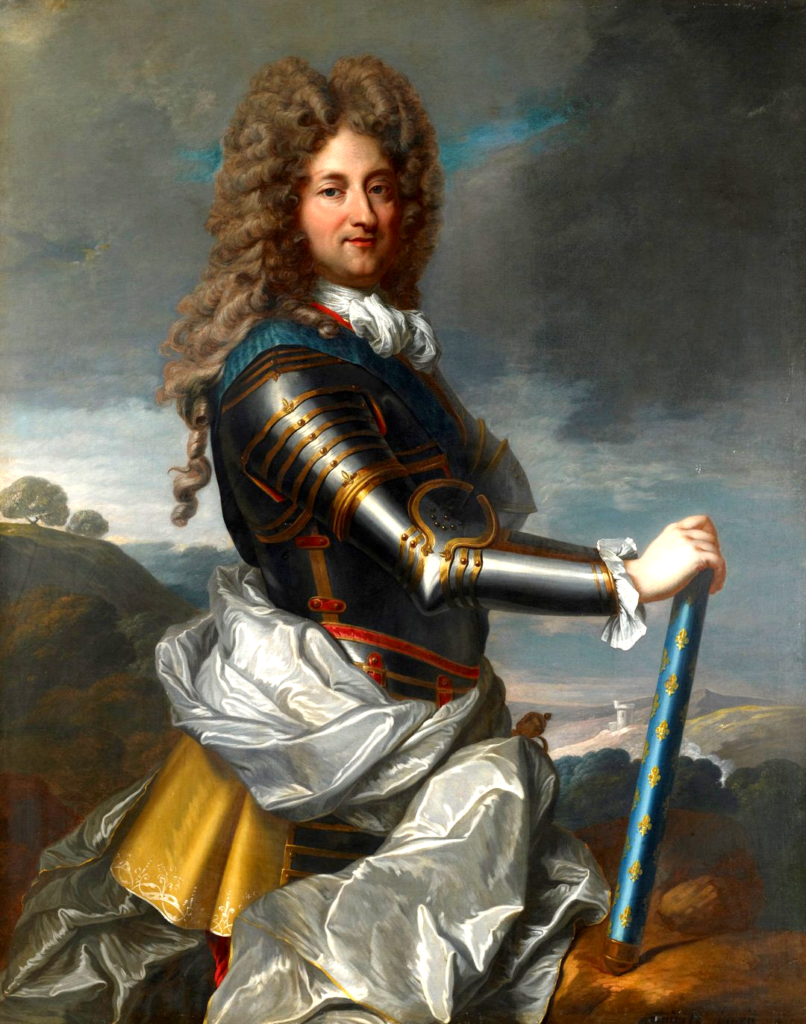
Philippe II, Duke of Orléans (1674–1723), by J.B. Santerre (Museo del Prado).
From ancient pilgrims to modern seafarers
When evaluating the historical legacy of the Knights Templar, the collective imagination is invariably drawn to the imagery of armored knights on horseback, charging across the arid plains of the Levant or standing vigil along the dusty pilgrimage routes of the Holy Land. This enduring terrestrial archetype, while historically grounded, obscures a critical operational reality: the ancient Templars were a formidable maritime power. Operating significant naval fleets, the Order ensured the safe passage of pilgrims crossing the perilous Mediterranean and protected vital trade routes that sustained the Crusader states1. Today, the modern manifestation of this legacy, the Ordre du Temple, has fundamentally evolved. Trading swords for specialized expertise, the contemporary Order is dedicated to protecting those who work in the complex and increasingly hostile maritime domain1.
The modern Order of the Temple, brought to public light in France on 17 March 1705 by the Duke of Orléans, operates as a fellowship with a highly specialized professional purpose1. While preserving the noble and spiritual heritage of its medieval predecessors, the contemporary Order heavily focuses its efforts on maritime security. It categorically rejects the general fraternalism that characterizes many late-twentieth-century revivalist factions, opting instead to function as an elite expert group1. The same chivalric duty that once shielded vulnerable twelfth-century travelers now extends to protecting modern seafarers and the global shipping infrastructure they sustain.
Understanding this evolution requires a comprehensive analysis of the Order's historical continuum. From its founding in 1119 in Jerusalem by Hugh de Payens and his eight companions, who were granted quarters in the Al-Aqsa Mosque by King Baldwin II, the Order quickly realized that holding the Holy Land required massive, vertically integrated logistics1. The sea was the primary artery for the transport of men, warhorses, bullion, and goods between the wealthy commanderies of Western Europe and the embattled Eastern Mediterranean4. The sheer scale of this administration necessitated continuous voyages, with Templar knights frequently acting as diplomatic envoys for popes and European monarchs6.
To facilitate this logistical undertaking, the Templars operated their own merchant and transport vessels, alongside chartering secular ships. Their fleet carried heavily armed brothers, essential supplies, ordinary pilgrims, and merchants, providing a highly secure alternative to standard commercial transit6. The Order's institutional experience in naval logistics became so renowned that kings and princes frequently contracted the Templars to manage complex maritime transport operations4. While the Templars were primarily a land force, their involvement in maritime warfare was significant. Templar oared galleys and cogs engaged both Muslim and rival Christian opponents in naval skirmishes to protect vital shipping lanes, relying on strategic coastal fortresses to project maritime power4.
Following the fall of Acre in 1291, the Templars relocated their primary headquarters to the island of Cyprus, further cementing their reliance on naval power9. However, the Order soon fell victim to the political machinations and severe financial insolvency of King Philip IV of France. On Friday, 13 October 1307, Philip ordered the mass arrest of the Templars across France, seizing their assets under fabricated charges of heresy, blasphemy, and idolatry1. A persistent historical enigma surrounds the fate of the Templar fleet stationed at the French Atlantic port of La Rochelle. Legend and historical analysis suggest that on the eve of the arrests, a fleet of Templar ships departed La Rochelle, evading the French king's grasp2. The destination of this fleet remains one of history's great maritime mysteries, with theories positing voyages to Scotland, Portugal, Sicily, or even across the Atlantic1. Regardless of the fleet's ultimate destination, the maritime capability of the Order in 1307 was undeniably vast.
Recent historiographical developments have fundamentally reshaped our understanding of the Order's supposed spiritual termination. In September 2001, the Italian paleographer Barbara Frale discovered the Chinon Parchment in the Vatican Secret Archives (Archivum Arcis Armarium D 218)1. This critical document explicitly confirms that in August 1308, Pope Clement V dispatched cardinals to the castle of Chinon and granted full sacramental absolution to Grand Master Jacques de Molay and other high-ranking Templar leaders1. A subsequent parchment dated 20 August 1308, addressed to Philip IV, declared that absolution had been granted to all Templars who had confessed, effectively neutralizing the charges of heresy and restoring them "to the Sacraments and to the unity of the Church"1. The Chinon Parchment forms the bedrock of the modern Ordre du Temple's moral and ethical claim to follow the spiritual path of the original Order, free from the historical taint of heresy1.
Institutional continuity
The survival of the Order between the execution of Jacques de Molay in 1314 and its public re-emergence on 17 March 1705 is a subject of profound historiographical analysis. Traditional historical narratives posit a hard cessation of the Order. However, the Ordre du Temple maintains a continuous lineage facilitated by clandestine transmission and aristocratic patronage, centered primarily around a document known as the Larmenius Charter, or Carta Transmissionis1.
The Larmenius Charter is a coded Latin manuscript detailing the transfer of the Templar leadership following the arrest of Jacques de Molay. According to the document, an aged Johannes Marcus Larmenius—a Palestinian-born Christian who served as the Templar Preceptor in Cyprus—recorded that the Grand Mastership was verbally transmitted to him in March 1314 by the imprisoned de Molay9. In February 1324, citing his advanced age and the rigorous demands of the office, Larmenius allegedly drafted the Carta Transmissionis to formally transfer the Grand Mastership to Franciscus Theobaldus, the Prior of the Templar Priory in Alexandria, Egypt1.
The Charter contains an appended list of twenty-two successive Grand Masters, continuing the legitimate line of the Templar Order through a clandestine "Dark Period" ending in the nineteenth century9. The document, currently kept at Mark Masons Hall in London, has been scrutinized by modern scholars. Many suspect it to be an eighteenth-century fabrication designed to legitimize later revivalist movements, pointing out that the deciphered Latin appears to be modern scholarly Latin rather than medieval ecclesiastical text1. However, supporters of the tradition argue that even if the physical parchment was a later codified transcription, the necessity of hiding records from the Inquisition makes the survival of an oral transmission lineage highly probable10.
The modern Ordre du Temple transitioned from a clandestine network to a visible, elite aristocratic fellowship in France under Philippe II, Duke of Orléans (1674–1723), who would later become the powerful Regent of France1. The Duke convened a Convent General at Versailles, officially promulgating the Statutes of the Knights of the Order of the Temple in 1705 and adopting the title of Grand Master6. Prior to the nineteenth century, the Order developed along two parallel lines: a French branch consisting of an aristocratic continental leadership network cultivated within the French royal court and legitimized by the Larmenius Charter, and a British branch operating as a Jacobite and Scottish lineage that leveraged Templar authority for political mobilization in support of the House of Stuart1.
The French Revolution dealt a devastating blow to the Order. In 1792, the Grand Master, Louis Hercule Timoléon de Cossé-Brissac (Duke of Brissac), was massacred at Versailles1. According to historical tradition, an item of the Duke's furniture was purchased by Brother Ledru, the son of Brissac's physician, who subsequently discovered the Larmenius Charter hidden inside it, eventually presenting it to Dr. Bernard-Raymond Fabré-Palaprat in 1804 to reconstitute the Order9.
The nineteenth century saw the Order navigate complex political waters, experiencing schisms and reconciliations. The Order achieved a high degree of imperial recognition during the reign of Napoleon III, who granted legal status to numerous Catholic congregations, allowing them to own property and establish institutional memory1. This era of patronage forged enduring institutional ties, such as the Order's deep historical connection to St. Michael’s Abbey in Farnborough, England, founded in 1880 by Empress Eugénie1. During the 1830s, the Order was briefly led by the British Admiral Sir William Sidney Smith, the celebrated "Hero of Acre," marking an early infusion of elite naval leadership into the Order's highest ranks1. Following Smith's death in 1840, the English and French factions split, with the English Grand Priory electing monarchs such as King Edward VII and King George V as Grand Masters, while the French line united under a series of regents, eventually depositing its archives in the National Archives of France in 18711.
Today, the modern Ordre du Temple operates strictly in accordance with the historical precedents of 1705 and 1853, explicitly distancing itself from the various OSMTH factions that proliferated in the late twentieth century1. The current Grand Prior is Bar. Dr. rer. nat. h.c. R.A.U. Juchter van Bergen Quast, LLM1. His legitimacy as the head of the Order is anchored in his direct descent from George Home (ca. 1556–1611), Baron Hume of Berwick and Earl of Dunbar, and Alexander Hume (1651–1720), 5th Earl of Dunbar1. Because these ancestors were ennobled by the Stuart dynasty, this lineage directly mirrors the nobiliary heritage of the original British and Jacobite members of the eighteenth-century Ordre du Temple1. Administratively, the Order holds official legal personality as a recognized religious institution under the laws of the Kingdom of the Netherlands (registration number 42078675), facilitated by a Dutch private foundation (registration number 41185188)1. From its operational bases, including Het Pelgrimshys in Dordrecht, Netherlands, and its offices in Aspremont, France, the Order directs its global initiatives through a strictly invitation-only membership model1.
The moral obligation of maritime security
The defining characteristic of the modern Ordre du Temple is its absolute pivot toward a specialized professional purpose: maritime security1. This mission is not merely a secular policy objective; it is deeply rooted in the theological and moral frameworks of the Order. At the core of the Order's modern mission is a profound reverence for human life, reflecting a Christian imperative to protect the vulnerable1. The Bible consistently emphasizes the sanctity of life, a mandate that the medieval Templars physically manifested by protecting defenseless pilgrims.
In the twenty-first century, the oceans remain unpredictable and perilous environments.
Seafarers face immense risks while traversing the world's waterways to maintain global trade and stability. Over ninety percent of global trade is transported by sea, yet the mariners who crew these vessels are frequently subjected to extreme weather, catastrophic mechanical failures, state-sponsored hybrid warfare, and violent criminality1. The Ordre du Temple views the protection of these workers as a direct translation of the Christian imperative to love one's neighbor. The Order recognizes a moral obligation to ensure the safety and well-being of these vital workers, treating them with the same dedication once offered to pilgrims1.
By advocating for robust safety measures, promoting effective training programs for crews operating in hazardous maritime zones, and supporting initiatives that mitigate risks at sea, the Order actively contributes to the preservation of human life in the maritime domain1. The Order demands that its members integrate these principles into their daily lives, acting as active citizens who promote safety, ethics, and protection within their respective professional maritime and military spheres to create a lasting, multi-generational impact1.
Expertise in action
Rather than engaging in general fraternalism, the Ordre du Temple functions as an expert group dedicated to mitigating risks at sea. They advocate for robust safety measures and support effective training programs for crews operating in hazardous maritime zones1. By utilizing the extensive maritime experience of its members—which includes master mariners, naval officers, and maritime specialists—the Order actively contributes to the preservation of human life and the security of international shipping routes. The efficacy of the Ordre du Temple's mission relies entirely on the unrivaled expertise of its Strategic Council, which represents a fusion of flag-level naval command, coast guard regulatory enforcement, and deep commercial maritime security architecture.
Navigating the modern threat landscape: 2025–2026
The necessity of the Ordre du Temple's maritime security advocacy is starkly illuminated by the deteriorating global maritime threat environment in 2025 and 2026. Commercial shipping faces continuous, overlapping security risks that threaten both the lives of seafarers and the resilience of the global energy and logistics supply chains21. The convergence of resurging piracy in Southeast Asia, persistent conflict-driven threats in the Red Sea, escalating hybrid warfare in the Black Sea, and the rapid proliferation of maritime cyber threats has created a multi-vector risk landscape that demands the specific expertise housed within the Order21.
The Gulf of Guinea: violence and kidnapping
The Gulf of Guinea remains the most violent piracy environment globally, characterized by highly organized, well-armed criminal syndicates operating primarily out of the Niger Delta21. While total global piracy numbers fluctuate, the severity of attacks in this region is disproportionately high. In 2025, the Gulf of Guinea accounted for 92% of all crew kidnappings globally, with 23 crew members abducted for ransom24. By early 2026, the threat remained critical, with pirates conducting attacks up to 300 nautical miles from the coast26.
The tactics employed in the Gulf of Guinea are heavily focused on crew abduction for ransom and the hijacking of petroleum-laden vessels for oil theft. Specific hotspots identified in 2025 and 2026 include the waters off Equatorial Guinea (where nine crew members were kidnapped 52nm West of Bata), Cameroon, Benin, and Nigeria. The Order's advocacy in this region centers on the implementation of Best Management Practices (BMP West Africa), the utilization of armed maritime security teams where legally permitted, and the fortification of vessel citadels to protect crews during violent boardings21.
The Straits of Malacca and Singapore: high-volume armed robbery
Over sixty percent of international maritime trade transits the Singapore Strait, making it one of the most critical and congested maritime arteries on earth. This density provides target-rich environments for opportunistic and organized armed robbery. In 2025, the Regional Cooperation Agreement on Combating Piracy and Armed Robbery against Ships in Asia (ReCAAP ISC) reported 108 incidents in the Strait of Malacca and Singapore—a 74% increase from the previous year. In the first half of 2025 alone, the Singapore Strait recorded more piracy incidents than in the entirety of 2024, fundamentally altering the risk calculus for vessel operators.
The threats here primarily involve the nighttime boarding of bulk carriers and container ships by perpetrators in small boats to steal engine spares, stores, and personal belongings. While generally categorized as lower severity compared to West African kidnappings, the sheer volume of attacks heightens the risk of violent escalation and navigational accidents in a highly congested waterway. The Order advises strict watch-keeping, the use of alarms, and immediate reporting to coastal state authorities, noting that robbers frequently abort attacks when detected21.
The Red Sea and the Gulf of Aden: asymmetric warfare
The Red Sea corridor represents a profound evolution in maritime threats, shifting from traditional Somali piracy to state-backed hybrid warfare and terrorism2. Houthi forces in Yemen have deployed advanced anti-ship drones, ballistic missiles, and autonomous weapons systems, creating a multi-vector risk landscape that forced the rerouting of massive volumes of global shipping away from the Suez Canal. In March 2025, a single Red Sea disruption halted the transit of 420,000 TEUs (Twenty-foot Equivalent Units). While a fragile ceasefire in 2026 allowed some carriers to return, the corridor remains highly volatile.
The Order's expertise is heavily focused on this region, drawing on insights to advise on transiting hostile waters, countering maritime terrorism, and adapting to the proliferation of autonomous maritime drones21.
Structured threat overview
To synthesize the operational environment that the Ordre du Temple navigates and analyzes, the following table outlines the primary threat zones and their defining characteristics based on the latest available intelligence for the 2025–2026 period:
Threat Region
Primary Threat Typology
Key Statistics & Indicators (2025-2026)
Operational Vulnerabilities & Challenges
Gulf of Guinea
Kidnapping for ransom, hijackings, oil theft24.
Accounted for 92% of global crew kidnappings (23 seafarers in 2025). Attacks occur up to 300nm offshore.
Massive rerouting impact (e.g., 420,000 TEUs halted in a single March 2025 event).
Proliferation of autonomous weapons systems; state-backed hybrid warfare; persistent unpredictability.
Sulu & Celebes Seas
Terrorist-linked crew abductions.
86 abductions since 2016, though a fragile lull has held recently.
Residual threats from Abu Sayyaf remnants; minimal security on smaller vessels traversing the tri-border area.
Black Sea / Baltic Sea
State-backed maritime hybrid warfare.
Escalating hybrid threats targeting commercial logistics and energy transport2.
Interconnected geopolitical conflicts disrupting global energy supply chain resilience2.
Noble commitment
Today, the ideals of chivalry are as necessary as ever. By advocating for those who face the dangers of the sea, the modern Knights Templar prove that true nobility lies in service and protection. The transformation of the Ordre du Temple from a medieval military juggernaut to a twenty-first-century maritime security brain trust is a testament to the enduring relevance of its core ideals. The digitalisation of shipping has expanded the attack surface to include cyber threats targeting navigational and engine management systems, while the shadow fleet and autonomous drones present unprecedented challenges to international maritime law.
In this volatile environment, the Ordre du Temple operates on the conviction that protecting a bulk carrier's crew from abduction in the Gulf of Guinea, or advising on anti-terrorism protocols in the Red Sea, is the modern moral equivalent of guarding pilgrims on the road to Jerusalem1. Their work ensures that the ancient vow to guard the defenseless continues to ripple across the world's oceans, establishing a legacy of expert protection and maritime advocacy that will endure long beyond 25 August 2026.