 |
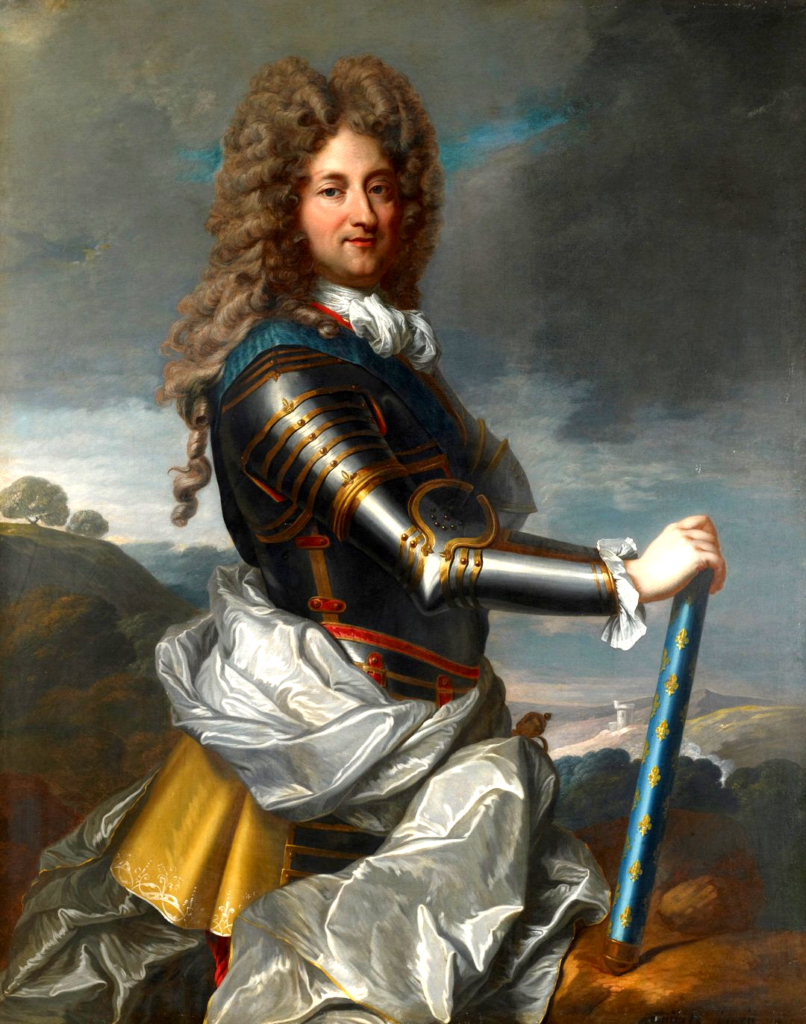
| Philippe II, Duke of Orléans (1674–1723), by J.B. Santerre (Museo del Prado). |
When evaluating the historical legacy of the Knights Templar, the collective imagination is invariably drawn to the imagery of armored knights on horseback, charging across the arid plains of the Levant or standing vigil along the dusty pilgrimage routes of the Holy Land. This enduring terrestrial archetype, while historically grounded, obscures a critical operational reality: the ancient Templars were a formidable maritime power. Operating significant naval fleets, the Order ensured the safe passage of pilgrims crossing the perilous Mediterranean and protected vital trade routes that sustained the Crusader states1. Today, the modern manifestation of this legacy, the Ordre du Temple, has fundamentally evolved. Trading swords for specialized expertise, the contemporary Order is dedicated to protecting those who work in the complex and increasingly hostile maritime domain1.
The modern Order of the Temple, brought to public light in France on 17 March 1705 by the Duke of Orléans, operates as a fellowship with a highly specialized professional purpose1. While preserving the noble and spiritual heritage of its medieval predecessors, the contemporary Order heavily focuses its efforts on maritime security. It categorically rejects the general fraternalism that characterizes many late-twentieth-century revivalist factions, opting instead to function as an elite expert group1. The same chivalric duty that once shielded vulnerable twelfth-century travelers now extends to protecting modern seafarers and the global shipping infrastructure they sustain.
Understanding this evolution requires a comprehensive analysis of the Order's historical continuum. From its founding in 1119 in Jerusalem by Hugh de Payens and his eight companions, who were granted quarters in the Al-Aqsa Mosque by King Baldwin II, the Order quickly realized that holding the Holy Land required massive, vertically integrated logistics1. The sea was the primary artery for the transport of men, warhorses, bullion, and goods between the wealthy commanderies of Western Europe and the embattled Eastern Mediterranean4. The sheer scale of this administration necessitated continuous voyages, with Templar knights frequently acting as diplomatic envoys for popes and European monarchs6.
To facilitate this logistical undertaking, the Templars operated their own merchant and transport vessels, alongside chartering secular ships. Their fleet carried heavily armed brothers, essential supplies, ordinary pilgrims, and merchants, providing a highly secure alternative to standard commercial transit6. The Order's institutional experience in naval logistics became so renowned that kings and princes frequently contracted the Templars to manage complex maritime transport operations4. While the Templars were primarily a land force, their involvement in maritime warfare was significant. Templar oared galleys and cogs engaged both Muslim and rival Christian opponents in naval skirmishes to protect vital shipping lanes, relying on strategic coastal fortresses to project maritime power4.
Following the fall of Acre in 1291, the Templars relocated their primary headquarters to the island of Cyprus, further cementing their reliance on naval power9. However, the Order soon fell victim to the political machinations and severe financial insolvency of King Philip IV of France. On Friday, 13 October 1307, Philip ordered the mass arrest of the Templars across France, seizing their assets under fabricated charges of heresy, blasphemy, and idolatry1. A persistent historical enigma surrounds the fate of the Templar fleet stationed at the French Atlantic port of La Rochelle. Legend and historical analysis suggest that on the eve of the arrests, a fleet of Templar ships departed La Rochelle, evading the French king's grasp2. The destination of this fleet remains one of history's great maritime mysteries, with theories positing voyages to Scotland, Portugal, Sicily, or even across the Atlantic1. Regardless of the fleet's ultimate destination, the maritime capability of the Order in 1307 was undeniably vast.
Recent historiographical developments have fundamentally reshaped our understanding of the Order's supposed spiritual termination. In September 2001, the Italian paleographer Barbara Frale discovered the Chinon Parchment in the Vatican Secret Archives (Archivum Arcis Armarium D 218)1. This critical document explicitly confirms that in August 1308, Pope Clement V dispatched cardinals to the castle of Chinon and granted full sacramental absolution to Grand Master Jacques de Molay and other high-ranking Templar leaders1. A subsequent parchment dated 20 August 1308, addressed to Philip IV, declared that absolution had been granted to all Templars who had confessed, effectively neutralizing the charges of heresy and restoring them "to the Sacraments and to the unity of the Church"1. The Chinon Parchment forms the bedrock of the modern Ordre du Temple's moral and ethical claim to follow the spiritual path of the original Order, free from the historical taint of heresy1.
Institutional continuity
The survival of the Order between the execution of Jacques de Molay in 1314 and its public re-emergence on 17 March 1705 is a subject of profound historiographical analysis. Traditional historical narratives posit a hard cessation of the Order. However, the Ordre du Temple maintains a continuous lineage facilitated by clandestine transmission and aristocratic patronage, centered primarily around a document known as the Larmenius Charter, or Carta Transmissionis1.
The Larmenius Charter is a coded Latin manuscript detailing the transfer of the Templar leadership following the arrest of Jacques de Molay. According to the document, an aged Johannes Marcus Larmenius—a Palestinian-born Christian who served as the Templar Preceptor in Cyprus—recorded that the Grand Mastership was verbally transmitted to him in March 1314 by the imprisoned de Molay9. In February 1324, citing his advanced age and the rigorous demands of the office, Larmenius allegedly drafted the Carta Transmissionis to formally transfer the Grand Mastership to Franciscus Theobaldus, the Prior of the Templar Priory in Alexandria, Egypt1.
The Charter contains an appended list of twenty-two successive Grand Masters, continuing the legitimate line of the Templar Order through a clandestine "Dark Period" ending in the nineteenth century9. The document, currently kept at Mark Masons Hall in London, has been scrutinized by modern scholars. Many suspect it to be an eighteenth-century fabrication designed to legitimize later revivalist movements, pointing out that the deciphered Latin appears to be modern scholarly Latin rather than medieval ecclesiastical text1. However, supporters of the tradition argue that even if the physical parchment was a later codified transcription, the necessity of hiding records from the Inquisition makes the survival of an oral transmission lineage highly probable10.
The modern Ordre du Temple transitioned from a clandestine network to a visible, elite aristocratic fellowship in France under Philippe II, Duke of Orléans (1674–1723), who would later become the powerful Regent of France1. The Duke convened a Convent General at Versailles, officially promulgating the Statutes of the Knights of the Order of the Temple in 1705 and adopting the title of Grand Master6. Prior to the nineteenth century, the Order developed along two parallel lines: a French branch consisting of an aristocratic continental leadership network cultivated within the French royal court and legitimized by the Larmenius Charter, and a British branch operating as a Jacobite and Scottish lineage that leveraged Templar authority for political mobilization in support of the House of Stuart1.
The French Revolution dealt a devastating blow to the Order. In 1792, the Grand Master, Louis Hercule Timoléon de Cossé-Brissac (Duke of Brissac), was massacred at Versailles1. According to historical tradition, an item of the Duke's furniture was purchased by Brother Ledru, the son of Brissac's physician, who subsequently discovered the Larmenius Charter hidden inside it, eventually presenting it to Dr. Bernard-Raymond Fabré-Palaprat in 1804 to reconstitute the Order9.
The nineteenth century saw the Order navigate complex political waters, experiencing schisms and reconciliations. The Order achieved a high degree of imperial recognition during the reign of Napoleon III, who granted legal status to numerous Catholic congregations, allowing them to own property and establish institutional memory1. This era of patronage forged enduring institutional ties, such as the Order's deep historical connection to St. Michael’s Abbey in Farnborough, England, founded in 1880 by Empress Eugénie1. During the 1830s, the Order was briefly led by the British Admiral Sir William Sidney Smith, the celebrated "Hero of Acre," marking an early infusion of elite naval leadership into the Order's highest ranks1. Following Smith's death in 1840, the English and French factions split, with the English Grand Priory electing monarchs such as King Edward VII and King George V as Grand Masters, while the French line united under a series of regents, eventually depositing its archives in the National Archives of France in 18711.
Today, the modern Ordre du Temple operates strictly in accordance with the historical precedents of 1705 and 1853, explicitly distancing itself from the various OSMTH factions that proliferated in the late twentieth century1. The current Grand Prior is Bar. Dr. rer. nat. h.c. R.A.U. Juchter van Bergen Quast, LLM1. His legitimacy as the head of the Order is anchored in his direct descent from George Home (ca. 1556–1611), Baron Hume of Berwick and Earl of Dunbar, and Alexander Hume (1651–1720), 5th Earl of Dunbar1. Because these ancestors were ennobled by the Stuart dynasty, this lineage directly mirrors the nobiliary heritage of the original British and Jacobite members of the eighteenth-century Ordre du Temple1. Administratively, the Order holds official legal personality as a recognized religious institution under the laws of the Kingdom of the Netherlands (registration number 42078675), facilitated by a Dutch private foundation (registration number 41185188)1. From its operational bases, including Het Pelgrimshys in Dordrecht, Netherlands, and its offices in Aspremont, France, the Order directs its global initiatives through a strictly invitation-only membership model1.
The moral obligation of maritime security
The defining characteristic of the modern Ordre du Temple is its absolute pivot toward a specialized professional purpose: maritime security1. This mission is not merely a secular policy objective; it is deeply rooted in the theological and moral frameworks of the Order. At the core of the Order's modern mission is a profound reverence for human life, reflecting a Christian imperative to protect the vulnerable1. The Bible consistently emphasizes the sanctity of life, a mandate that the medieval Templars physically manifested by protecting defenseless pilgrims.
In the twenty-first century, the oceans remain unpredictable and perilous environments.
Seafarers face immense risks while traversing the world's waterways to maintain global trade and stability. Over ninety percent of global trade is transported by sea, yet the mariners who crew these vessels are frequently subjected to extreme weather, catastrophic mechanical failures, state-sponsored hybrid warfare, and violent criminality1. The Ordre du Temple views the protection of these workers as a direct translation of the Christian imperative to love one's neighbor. The Order recognizes a moral obligation to ensure the safety and well-being of these vital workers, treating them with the same dedication once offered to pilgrims1.
By advocating for robust safety measures, promoting effective training programs for crews operating in hazardous maritime zones, and supporting initiatives that mitigate risks at sea, the Order actively contributes to the preservation of human life in the maritime domain1. The Order demands that its members integrate these principles into their daily lives, acting as active citizens who promote safety, ethics, and protection within their respective professional maritime and military spheres to create a lasting, multi-generational impact1.
Expertise in action
Rather than engaging in general fraternalism, the Ordre du Temple functions as an expert group dedicated to mitigating risks at sea. They advocate for robust safety measures and support effective training programs for crews operating in hazardous maritime zones1. By utilizing the extensive maritime experience of its members—which includes master mariners, naval officers, and maritime specialists—the Order actively contributes to the preservation of human life and the security of international shipping routes. The efficacy of the Ordre du Temple's mission relies entirely on the unrivaled expertise of its Strategic Council, which represents a fusion of flag-level naval command, coast guard regulatory enforcement, and deep commercial maritime security architecture.
Navigating the modern threat landscape: 2025–2026
The necessity of the Ordre du Temple's maritime security advocacy is starkly illuminated by the deteriorating global maritime threat environment in 2025 and 2026. Commercial shipping faces continuous, overlapping security risks that threaten both the lives of seafarers and the resilience of the global energy and logistics supply chains21. The convergence of resurging piracy in Southeast Asia, persistent conflict-driven threats in the Red Sea, escalating hybrid warfare in the Black Sea, and the rapid proliferation of maritime cyber threats has created a multi-vector risk landscape that demands the specific expertise housed within the Order21.
The Gulf of Guinea: violence and kidnapping
The Gulf of Guinea remains the most violent piracy environment globally, characterized by highly organized, well-armed criminal syndicates operating primarily out of the Niger Delta21. While total global piracy numbers fluctuate, the severity of attacks in this region is disproportionately high. In 2025, the Gulf of Guinea accounted for 92% of all crew kidnappings globally, with 23 crew members abducted for ransom24. By early 2026, the threat remained critical, with pirates conducting attacks up to 300 nautical miles from the coast26.
The tactics employed in the Gulf of Guinea are heavily focused on crew abduction for ransom and the hijacking of petroleum-laden vessels for oil theft. Specific hotspots identified in 2025 and 2026 include the waters off Equatorial Guinea (where nine crew members were kidnapped 52nm West of Bata), Cameroon, Benin, and Nigeria. The Order's advocacy in this region centers on the implementation of Best Management Practices (BMP West Africa), the utilization of armed maritime security teams where legally permitted, and the fortification of vessel citadels to protect crews during violent boardings21.
The Straits of Malacca and Singapore: high-volume armed robbery
Over sixty percent of international maritime trade transits the Singapore Strait, making it one of the most critical and congested maritime arteries on earth. This density provides target-rich environments for opportunistic and organized armed robbery. In 2025, the Regional Cooperation Agreement on Combating Piracy and Armed Robbery against Ships in Asia (ReCAAP ISC) reported 108 incidents in the Strait of Malacca and Singapore—a 74% increase from the previous year. In the first half of 2025 alone, the Singapore Strait recorded more piracy incidents than in the entirety of 2024, fundamentally altering the risk calculus for vessel operators.
The threats here primarily involve the nighttime boarding of bulk carriers and container ships by perpetrators in small boats to steal engine spares, stores, and personal belongings. While generally categorized as lower severity compared to West African kidnappings, the sheer volume of attacks heightens the risk of violent escalation and navigational accidents in a highly congested waterway. The Order advises strict watch-keeping, the use of alarms, and immediate reporting to coastal state authorities, noting that robbers frequently abort attacks when detected21.
The Red Sea and the Gulf of Aden: asymmetric warfare
The Red Sea corridor represents a profound evolution in maritime threats, shifting from traditional Somali piracy to state-backed hybrid warfare and terrorism2. Houthi forces in Yemen have deployed advanced anti-ship drones, ballistic missiles, and autonomous weapons systems, creating a multi-vector risk landscape that forced the rerouting of massive volumes of global shipping away from the Suez Canal. In March 2025, a single Red Sea disruption halted the transit of 420,000 TEUs (Twenty-foot Equivalent Units). While a fragile ceasefire in 2026 allowed some carriers to return, the corridor remains highly volatile.
The Order's expertise is heavily focused on this region, drawing on insights to advise on transiting hostile waters, countering maritime terrorism, and adapting to the proliferation of autonomous maritime drones21.
Structured threat overview
To synthesize the operational environment that the Ordre du Temple navigates and analyzes, the following table outlines the primary threat zones and their defining characteristics based on the latest available intelligence for the 2025–2026 period:
Noble commitment
Today, the ideals of chivalry are as necessary as ever. By advocating for those who face the dangers of the sea, the modern Knights Templar prove that true nobility lies in service and protection. The transformation of the Ordre du Temple from a medieval military juggernaut to a twenty-first-century maritime security brain trust is a testament to the enduring relevance of its core ideals. The digitalisation of shipping has expanded the attack surface to include cyber threats targeting navigational and engine management systems, while the shadow fleet and autonomous drones present unprecedented challenges to international maritime law.
In this volatile environment, the Ordre du Temple operates on the conviction that protecting a bulk carrier's crew from abduction in the Gulf of Guinea, or advising on anti-terrorism protocols in the Red Sea, is the modern moral equivalent of guarding pilgrims on the road to Jerusalem1. Their work ensures that the ancient vow to guard the defenseless continues to ripple across the world's oceans, establishing a legacy of expert protection and maritime advocacy that will endure long beyond 25 August 2026.
Works cited
l'ordre du Temple – Est. 1705, https://ordredutemple.fr/
Templar Fleet's Mysterious Voyage | PDF - Scribd, https://www.scribd.com/document/943895109/07-Legend-of-the-Templar-Fleet
Introduction - Templar Families, https://www.cambridge.org/core/books/templar-families/introduction/82855A90914B5DE71D468DF1604D3F3A
The Templars and the Sea - Akademicka Platforma Czasopism, https://apcz.umk.pl/OM/article/view/OM.2020.011
Ordines militares XXV tHe temPlars and tHe sea - UMK, https://apcz.umk.pl/OM/article/download/OM.2020.011/27643/74280
Philippe II, Duke of Orléans | Military Wiki | Fandom, https://military-history.fandom.com/wiki/Philippe_II,_Duke_of_Orl%C3%A9ans
Knights Templar and Maritime Exploration: Navigating the Seas of, https://bricksmasons.com/blogs/masonic-education/knights-templar-and-maritime-exploration-navigating-the-seas-of-the-medieval-world
What Kind Of Ships Did The Knights Templar Use? - YouTube, https://www.youtube.com/watch?v=-o2QUqqQQUk
Larmenius Charter | Templars Wiki - Fandom, https://templars.fandom.com/wiki/Larmenius_Charter
The Larmenius Charter History or Forgery? | The Ninth Templar Story, https://9thtemplar.wordpress.com/2012/09/11/the-larmenius-charter-history-or-forgery/
Chinon Parchment - Wikipedia, https://en.wikipedia.org/wiki/Chinon_Parchment
Death - Templari Oggi - Catholic Templars, https://www.templarstoday.us/la-morte-2/
Larmenius Charter - Wikipedia, https://en.wikipedia.org/wiki/Larmenius_Charter
Noble born Knights Templar Families, https://9thtemplar.wordpress.com/tag/noble-born-knights-templar-families/
Historical and Mythological Touchstones - The Order of the Temple, https://otsj.org/history-myth/
Fonds de l'ordre moderne du temple (1705-1857) - France Archives, https://francearchives.gouv.fr/findingaid/67bd5dae200362194b171fca18e1f56370cddee8
Statuts des Chevaliers du Temple | PDF | Ordre du Temple - Scribd, https://fr.scribd.com/document/813209428/Statut-des-chevaliers-de-l-Ordre-du-Temp-LA-2
'The Larmenius Charter' and Virginia Hambley - Rosamond Press, https://rosamondpress.com/2013/10/07/the-larmenius-charter-and-virginia-hambley/
New Ambassador to the SwissCham NL: Charles Rouse, Lord of, https://swisschamberofcommerce.ch/new-ambassador-to-the-swiss-chamber-of-commerce-in-the-netherlands-the-lord-of-south-clifton/
The Ordre du Temple (est. 1705): an analysis of institutional, https://freiherrvonquast.wordpress.com/2025/12/09/the-ordre-du-temple-est-1705-an-analysis-of-institutional-continuity-political-patronage-and-modern-institution/
The State of Maritime Security in 2026: Key Risks & Emerging Threats, https://neptunep2pgroup.com/blogs/the-state-of-maritime-security-in-2026-key-risks-emerging-threats/
Maritime Piracy as a Threat to Energy Security in Global Supply, https://www.mdpi.com/2673-4591/147/1/5
Is it time to rethink security when maritime faces continuous conflict?, https://www.seatrade-maritime.com/security/is-time-to-rethink-security-when-maritime-faces-continuous-conflict-
Top Maritime Piracy Hotspots in 2026: Critical Risk Zones for Ship, https://www.nautilusshipping.com/news-and-insights/top-maritime-piracy-hotspots-in-2026-critical-risk-zones-for-ship-operators
Research Report XXXV Annual Session, https://www.munish.nl/pages/downloader.php?code=ga103&comcode=ga1&year=2025
Piracy And Armed Robbery Prone Areas And Warnings, https://icc-ccs.org/piracy-and-armed-robbery-prone-areas-and-warnings/
BMP West Africa: Best Management Practices to Deter Piracy and, https://www.ics-shipping.org/resource/best-management-practices-to-deter-piracy-and-enhance-maritime-security-in-the-red-sea-gulf-of-aden-indian-ocean-and-arabian-sea/
Lars Bergqvist | Royal United Services Institute - RUSI, https://www.rusi.org/people/bergqvist

